Showing posts with label Mental Health. Show all posts

Thursday, October 18, 2018

Declining Resilience in College Students

By Kathy Mahoney
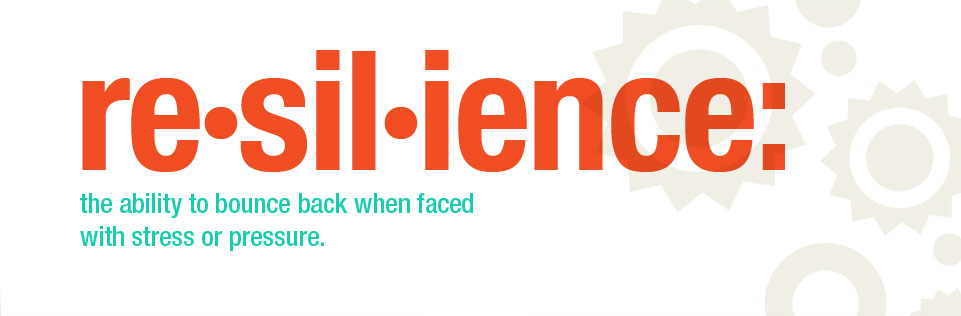
Resilience. It’s a word that pops up often when talking about youth, so much so that it is the theme of our Advisory program at MHS this year. What is resilience and why should we, as educators and parents, care? Definitions include the ability to recover quickly from difficulties, or being able to bounce back when faced with adversity. Research has shown that this trait is linked to future success and happiness.

A recent article from Psychology Today reports that colleges are seeing an increasing number of students that lack this quality. Counseling services are overwhelmed, professors are frustrated with students’ inability to solve even the simplest problems, and students are not learning to become responsible adults. How did we get here? And what can we do about it?

Dan Jones, former president of the Association for University and College Counseling Center Directors, says, “[Students] haven’t developed skills in how to soothe themselves, because their parents have solved all their problems and removed the obstacles. They don’t seem to have as much grit as previous generations.”

Dan goes on to say that he’s not trying to throw parents under the bus, as parents face many societal pressures raising kids in today’s world. These pressures have led them to manage and structure their kids’ lives in order to keep them safe, and to help them reach their potential, both noble goals. The downside, however, has been a “decline in opportunities [for kids] to play, explore, and pursue their own interests away from adults.” Anxiety and depression are up, and kids have less sense of control over their lives. When young people are not given opportunities to learn how to solve their own problems, get into trouble and find their way out, experience failure and realize they will survive, they become college-aged students that don’t know how to take responsibility for themselves, needing adult intervention when a problem arises.

In today’s world, a balance between structure and independence is needed if we are to build resilience. “If we want to prepare our kids for college—or for anything else in life—we have to counter these social forces. We have to give our children the freedom, which children have always enjoyed in the past, to get away from adults so they can practice being adults—that is, practice taking responsibility for themselves.”

Visit this link to read the article.

Friday, September 28, 2018

Start With Hello

by Russ Becker

This week, Medfield’s R.E.N.E.W Project and Friends of Rachel club have been hard at work promoting the “Start With Hello” Movement. Start With Hello is put on by Sandy Hook Promise and it aims increase the welcoming nature of our school while decreasing social isolation among our students. The movement began with a simple idea that if you see someone by themselves, isolated and alone, sometime all you have to do is say hello to make them a part of your community. All week we have had students reading announcements to highlight the spirit of the movement, and we have handed out bingo boards that will encourage students to talk to others they may not know very well. Tomorrow our week concludes with a photo booth and a signed pledge to foster social inclusion at lunch. If you would like to know more please reach out and don’t forget to Start With Hello!


Thursday, August 30, 2018

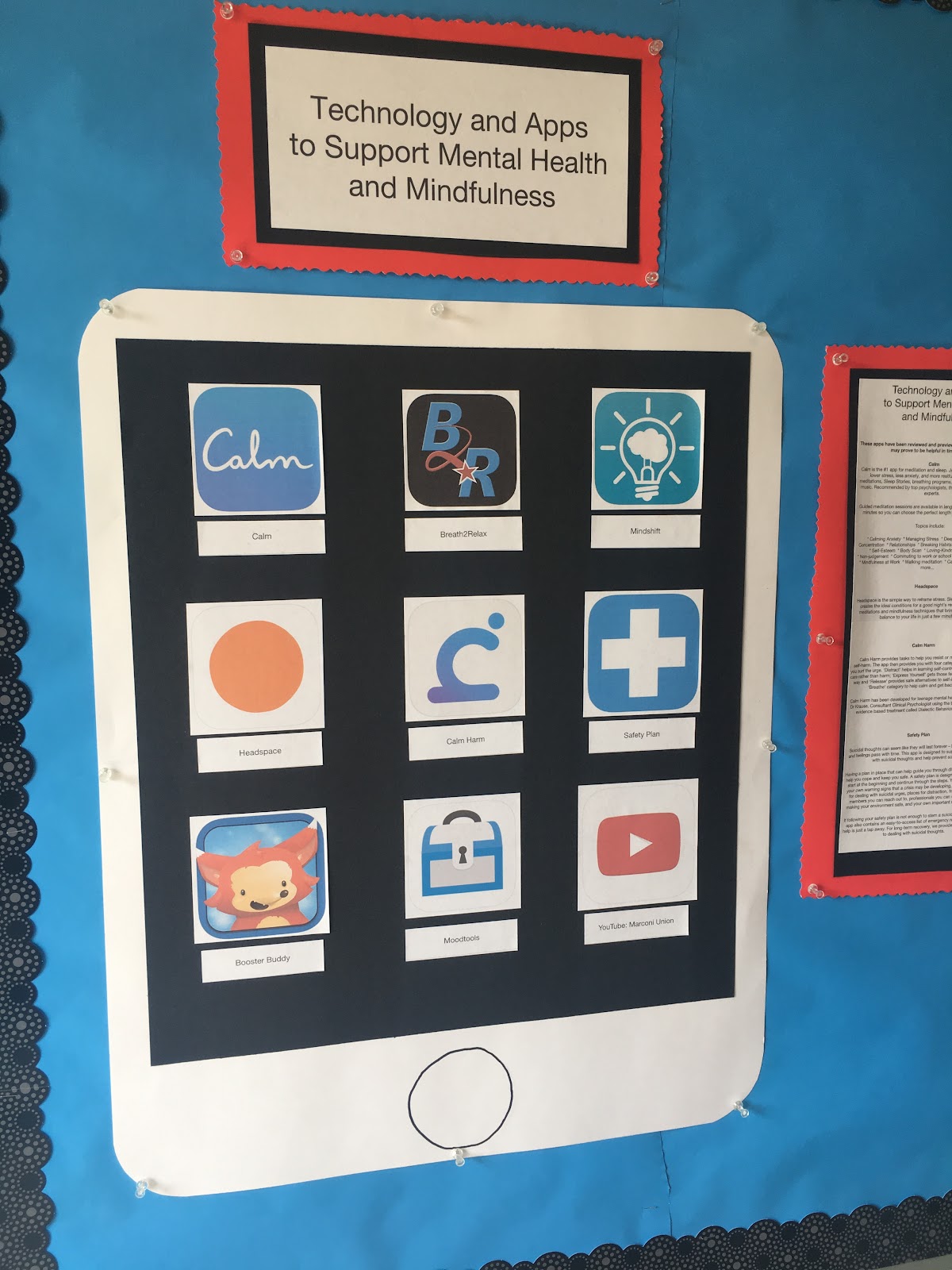
Technology and Apps to Support Mental Health and Mindfulness

By Stephanie Worthley

The MHS Counselors spent time this summer creating a toolbox of resources for our students to use when struggling with anxiety, depression, and other mental health conditions. Apps and websites can be effective in making therapy more accessible, efficient, and portable. The MHS Counselors used Summer R&D time to research apps and websites that can most efficiently help students whether at school or that they can access at home.

The following apps have all been reviewed and previewed by the MHS Counselors and may prove to be helpful in times of stress:

Calm
    Calm is the #1 app for meditation and sleep. Join the millions experiencing lower stress, less anxiety, and more restful sleep with our guided meditations, Sleep Stories, breathing programs, masterclasses, and relaxing music. Recommended by top psychologists, therapists, and mental health experts.
    Guided meditation sessions are available in lengths of 3, 5, 10, 15, 20 or 25 minutes so you can choose the perfect length to fit with your schedule.
    Topics include:
* Calming Anxiety * Managing Stress * Deep Sleep * Focus and Concentration * Relationships
* Breaking Habits * Happiness * Gratitude * Self-Esteem * Body Scan * Loving-Kindness
* Forgiveness * Non-judgement * Commuting to work or school * Mindfulness at College
* Mindfulness at Work * Walking meditation * Calm Kids * And so much more...

Headspace
Headspace is the simple way to reframe stress. Sleep trouble? Meditation creates the ideal conditions for a good night’s rest. Relax with guided meditations and mindfulness techniques that bring calm, wellness and balance to your life in just a few minutes a day.

Calm Harm
Calm Harm provides tasks to help you resist or manage the urge to self-harm. The app then provides you with four categories of tasks to help you surf the urge. ‘Distract' helps in learning self-control; ‘Comfort' helps you care rather than harm; 'Express Yourself' gets those feelings out in a different way and ‘Release' provides safe alternatives to self-injury. There is also a ‘Breathe' category to help calm and get back in control.
Calm Harm has been developed for teenage mental health charity stem4 by Dr Krause, Consultant Clinical Psychologist using the basic principles of an evidence based treatment called Dialectic Behaviour Therapy (DBT).

Safety Plan
Suicidal thoughts can seem like they will last forever – but these thoughts and feelings pass with time. This app is designed to support those dealing with suicidal thoughts and help prevent suicide.
Having a plan in place that can help guide you through difficult moments can help you cope and keep you safe. A safety plan is designed so that you can start at the beginning and continue through the steps. You can customize your own warning signs that a crisis may be developing, coping strategies for dealing with suicidal urges, places for distraction, friends and family members you can reach out to, professionals you can call, methods of making your environment safe, and your own important reasons for living.
If following your safety plan is not enough to stem a suicidal crisis, then this app also contains an easy-to-access list of emergency resources so that help is just a tap away. For long-term recovery, we provide a thorough guide to dealing with suicidal thoughts.

Mindshift
Struggling with anxiety? Tired of missing out? There are things you can do to stop anxiety and fear from controlling your life. MindShift is an app designed to help teens and young adults cope with anxiety. It can help you change how you think about anxiety. Rather than trying to avoid anxiety, you can make an important shift and face it.
MindShift will help you learn how to relax, develop more helpful ways of thinking, and identify active steps that will help you take charge of your anxiety.

Breath2Relax
Breathe2Relax is a portable stress management tool which provides detailed information on the effects of stress on the body and instructions and practice exercises to help users learn the stress management skill called diaphragmatic breathing.Breathing exercises have been documented to decrease the body’s ‘fight-or-flight’ (stress) response, and help with mood stabilization, anger control, and anxiety management.

Moodtools
If you are feeling sad, anxious, or depressed, lift your mood with MoodTools! MoodTools is designed to help you combat depression and alleviate your negative moods, aiding you on your road to recovery.
MoodTools contains several different research-supported tools. They include:
  - Thought Diary - Improve your mood by analyzing your thoughts and identifying negative / distorted thinking patterns based on principles from Cognitive Therapy
  - Activities - Regain your energy by performing energizing activities and tracking your mood before and after, based on Behavioral Activation Therapy
  - Safety Plan - Develop a suicide safety plan to keep you safe and utilize emergency resources during a suicidal crisis
  - Information - Read information, self-help guidelines, and find help with internet resources
  - Test - Take the PHQ-9 depression questionnaire and track your symptom severity over time
  - Video - Discover helpful YouTube videos that can improve your mood and behavior, from guided meditations to enlightening TED talks

Booster Buddy
Manage your personal wellness journey and earn achievements as your sidekick guides you through a series of daily quests designed to establish and sustain positive habits.
•Check-in with how you are feeling each day
•Use coping skills
•Keep track of appointments and medications
•Get started on tasks
•Follow self-care routines
•Increase real-life socialization

YouTube: Marconi Union
Relax and restore your mind body and soul
Neuroscience Says Listening to This Song Reduces Anxiety by Up to 65 Percent
The group that created "Weightless", Marconi Union, did so in collaboration with sound therapists. Its carefully arranged harmonies, rhythms, and bass lines help slow a listener's heart rate, reduce blood pressure and lower levels of the stress hormone cortisol.

https://www.inc.com/melanie-curtin/neuroscience-says-listening-to-this-one-song-reduces-anxiety-by-up-to-65-percent.html

Thursday, December 21, 2017

Teen Depression and Suicide Linked to Smartphone Use


by Kathy Mahoney

NPR recently published a story about the dangerous connection between smartphones, depression, and suicide rates in teens. Research has shown a sharp increase in depression symptoms, suicide risk factors, and suicide rates in teens since 2012, coinciding with the time smartphones became popular.

The study found that teens who spend five or more hours a day on their phones are 71% more likely to have one risk factor for suicide. The amount of screen time, no matter the content, correlated to higher rates of depression.

The author of the study stated that “three hours a day and beyond is where you saw the more pronounced increase in those who had at least one suicide risk factor."

Recommendations for parents included limiting use to two hours per day or less. When not using smartphones, teens should be engaging in activities that promote mental health, such as exercising, seeing friends and family face to face, sleeping, and getting outside. Furthermore, the author reports that the ideal age that a teen should get a smartphone is 14, when they enter high school. Studies show that younger teens may be more vulnerable to the demands of social media.

To read the article in full, click here.

Tuesday, August 1, 2017

How to support your child throughout their college experience: Tips for parents


by Amanda Padden


The Signs of Suicide Prevention Program is a program the guidance department presents to all students at MHS (see Stephanie Worthley’s blog post called Youth Suicide Prevention). I was reading through some of the resources the program provides and came across one called, “What can parents do to best support a child’s college experience?” The document outlines how parents can identify distress in their child and better understand how to help them when they no longer live at home. Symptoms of depression, bipolar disorder, and suicidal thinking are discussed, but what I thought was interesting and worth sharing is the information it provides about how to strengthen communication between parents and their college age children around mental health. Below are some helpful suggestions for parents:
  • Be honest about mental health in your own life or the lives of family and friends. Discuss the value of psychological help. Talking about mental health can help to normalize it. 
  • Be an active listener- don’t finish your child’s thoughts or interrupt with a quick solution when they have a problem. Let them consider the options and help them to make a pros and cons list for each. 
  • Talk, don’t criticize- communicate your views in non-critical ways, avoiding words like must or ought. I think this is especially important when talking about drugs/alcohol, friend groups, etc. 
  • Let your child know they don’t have to protect you from their problems. 
  • Know the resources available at the college- make sure your child knows where the counseling center is. If your child is currently experiencing mental health problems, contact the counseling center in advance and schedule an appointment for the beginning of the school year. 
  • If your child contacts you in distress, try to be calm in the moment and tell them that they did the right thing by sharing the problem with you. If you are far away, think about someone local you can contact- the counseling center, the resident advisor, the dean, a local hospital, the campus police, etc. 
College can be a very exciting and joyful time for students and their families. However, it’s also a time of transition and uncertainty. Having an open and honest conversation about mental health (or substance abuse, consent, stress, etc.) before your child leaves for school will make it easier for your child to come to you if one of those problems arises.

For more information about supporting your child in their college experience, please visit this site: https://mentalhealthscreening.org/blog/category/college

Tuesday, April 25, 2017

13 Reasons Why

by Anne Lodge


Have you heard of the new Netflix series, 13 Reasons Why? If you haven’t yet heard of it, it’s important to be aware of this trending show and the important conversations that can and should stem from viewing it. The fictional series is based on a novel, also titled 13 Reasons Why, and it profiles the character of Hannah Baker, a 17-year old who commits suicide and leaves behind tapes for 13 people who she says played a role in why she killed herself.

The series has created quite a buzz about suicide and the multiple difficult topics that the show addresses throughout the episodes, including bullying, rape, drunk driving, and slut shaming. Many teenagers are binge watching 13 Reasons Why with little or no adult guidance. When topics as huge and as serious as those in the show are covered, it’s important for adults to be aware of what their children are viewing and talking about. I would highly recommend engaging in conversations with your teen about the show and taking some time to view it yourself, especially if your child has watched or plans to watch the series.

The National Association of School Psychologists (NASP) offers up some talking points to guide a conversation:
      1. Ask your child if they have heard or seen the series 13 Reasons Why. While we don’t recommend that they be encouraged to view the series, do tell them you want to watch it, with them or to catch up, and discuss their thoughts.
      2. If they exhibit any of the warning signs [making indirect or direct suicide threats; giving away prized possessions; changes in behavior, appearance/hygiene, thoughts, and/or feelings; emotional distress; preoccupation with death], don’t be afraid to ask if they have thought about suicide or if someone is hurting them. Raising the issue of suicide does not increase the risk or plant the idea. On the contrary, it creates the opportunity to offer help.
      3. Ask your child if they think any of their friends or classmates exhibit warning signs. Talk with them about how to seek help for their friend or classmate. Guide them on how to respond when they see or hear any of the warning signs.
      4. Listen to your children’s comments without judgment. Doing so requires that you fully concentrate, understand, respond, and then remember what is being said. Put your own agenda aside.
      5. Get help from a school-employed or community-based mental health professional if you are concerned for your child’s safety or the safety of one of their peers.

Additionally, they offer some words of caution about the show. The series is intense and teenagers may easily identify with some of what the characters experience in the episodes. It is not recommended that anyone who is vulnerable to suicide watch the show.

Ultimately, the most important take-away from watching 13 Reasons Why and engaging in dialogue about the series should be that suicide is not a solution to problems and that help is available to anyone who may be struggling. If you or someone you know is struggling with thoughts of suicide, talk to a trusted adult, call 1-800-273-TALK (8255), or text “START” to 741741.

If you have any concerns about your child or would like additional support in conversing about these topics, please contact your child’s guidance counselor.

Tuesday, March 7, 2017

When Is a Kid Like a Soda Can?

by Tracy Allen

Recently Amanda Padden and I attended a conference on helping students with anxiety. Having had a number of professional development opportunities around anxiety, I was unsure that I would get anything new. One can hope for that one or two gems that you didn't know or hadn't thought of in that same way that you can bring back to work. Jessica Minahan (Behavior Analyst and author) sent everyone away with very practical and proactive tips for educators to help our increasingly dense population of anxious students. Here are some of the strongest takeaways that can help reframe interactions between adults and those suffering from anxiety.

1) The Soda Can Metaphor
Imagine that I am walking into a meeting with you, the reader. You have two cans of soda and offer me one. I do not know that you have vigorously shaken one up prior to my arrival. I open one and it explodes. Both cans looked the same so it would be impossible to know that one had been shaken. This often happens when walking into our classrooms. Students may all look the same. We don't necessarily know what has happened in a child's life prior to entering the classroom or even the school building that day; nor do we know if a student's anxiety has been triggered. What may become clear after we start the lesson or conversation is that they are not in a place to learn. This could be expressed in defiance, in crying, in lack of participation, or in trying to leave the classroom several times. If we go into each interaction with a student understanding that there is a possibility things have not been "normal" for them prior to our meeting, we won't be caught off-guard if the class is disrupted.

2) Communication
Another great reminder for me was that anxious behaviors, as well as challenging behaviors, are a child's way of trying to tell us something. Not doing any written assignments is not necessarily a sign of a learning issue. It could be anxiety interfering with executive functioning skills like planning the work and organizing the thoughts. Another possible message from the student is that the student is having a hard time transitioning from what the he/she was doing before to a task that is not preferred - writing. We have to ask some more questions in order to address the real issue.

3) Random Acts of Intervention
Most educators want to fix problems, especially if those problems concern struggles our students are having. As fixers, we don't often fully listen or evaluate a situation before we offer a solution. Jessica Minahan reminded us that this system of drive-by interventions or as she called them Random Acts of Intervention don't work. We need to pause before responding. This is a difficult task but important in finding a solid sustainable solution.

Jessica Minahan shared many more interventions but what struck me about these these key points is how they tie into my study of mindfulness. If I am not present in the moment, I can not be ready for what each class or meeting or practice may bring. If I'm not present, I can not really hear what a student, parent, colleague or administer needs or is asking for and focus on the tone or manner of delivery. And if I don't pause and make sure I'm present, I am more likely to fix something with a band-aid solution and not what the situation really calls for. Her strategies are very much worth sharing with our colleagues and hopefully will help all our students, not just our anxious ones, more successful.

Wednesday, March 1, 2017

Make Sense of Grieving

by Jen Dondero

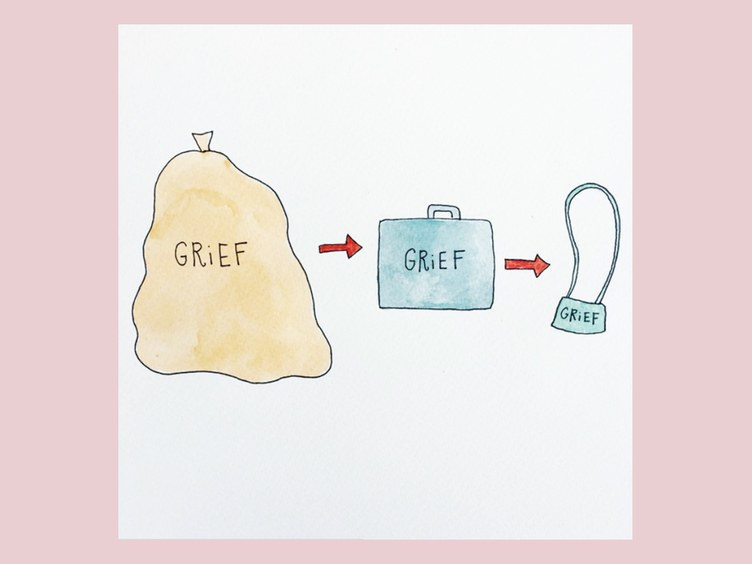
A friend recently shared the article, “This One Illustration Helped Me Make Sense of Grieving” by Haley Goldberg and it really hit a nerve for me. It was a realistic and tangible illustration of loss, which I felt everyone can understand and hopefully in some way relate to. The author saw a hand drawn image on Instagram with the caption, "It's different for everyone, but my personal experience is that grief doesn't ever go away, but it does change shape and it becomes something you can hold rather than something that overwhelms you—a part of you, rather than a burden." The old adage of “time heals all wounds” does not do justice to grief and each individual’s process of grieving. 

grief-main-image.jpgI appreciate the idea that grief transforms overtime and still exists as we never forget those we lost. Instead of being an overwhelming burden to carry, it becomes a part of who we are and is something that stays with us.

Goldberg goes on to write, “My grief still existed, but it didn't overcome me as much.” For those who are grieving, I hope this image gives you some comfort to know that one day the grief will transform shape and hopefully become less of unwielding burden.

In reading more about grief, I found this article really helpful in clarifying how adolescents grieve and the importance of understanding that each individual experiences grief in their own unique way.6 Ways that Adolescent Grief is Different. Some key takeaways for me were 
  • Adolescents may become isolated in their grief and withdraw from parents and adults. Keep offering support or to help them find a support group/network/therapist. 
  • They may also appear not be grieving as they crave normalcy as to not appear different from their peers. 
  • Adolescents are more likely to turn to the Internet and social media as they cope with loss. While support online can help, adolescents need to know that information can be inaccurate online and nothing can replace human connection and support. 

Monday, November 28, 2016

Five Signs of Suffering

by Amanda Padden

On Friday, November 18th, I had the opportunity to attend an event for Guidance Counselors at The University of New Hampshire. I heard from current students, academic deans and admissions counselors and took a tour of the beautiful campus. I was also able to read two student applications to get a sense of how applications are reviewed at UNH. What I found most interesting about my visit was the time they took to talk about the well being of their students. I heard from the director of the counseling center on campus who outlined the emotional supports they offer as well as the outreach they do to educate their students about how to seek help for themselves or their friends. They showed us a document that is shared with all students called The Five Signs of Suffering. These signs are:
1. The person's personality changes
2. They seem uncharacteristically angry, anxious, agitated or moody
3. They withdraw or isolate themselves from other people
4. They stop taking care of themselves and may engage in risky behavior
5. They seem overcome with hopelessness and overwhelmed by their circumstances
The Medfield middle school and high school guidance departments had just presented the Signs of Suicide program to the seventh and ninth graders that week, so I felt great that Medfield students are going to college already knowing what signs of depression are and that it's reinforced at the college level. Another point that UNH made is that many students when they arrive at college struggle with decision making, solving problems on their own, and dealing with disappointment. I think this is an area the guidance department can impact in future classroom guidance sessions and parent seminars.

Wednesday, November 9, 2016

Genderbread Person

by Anne Lodge

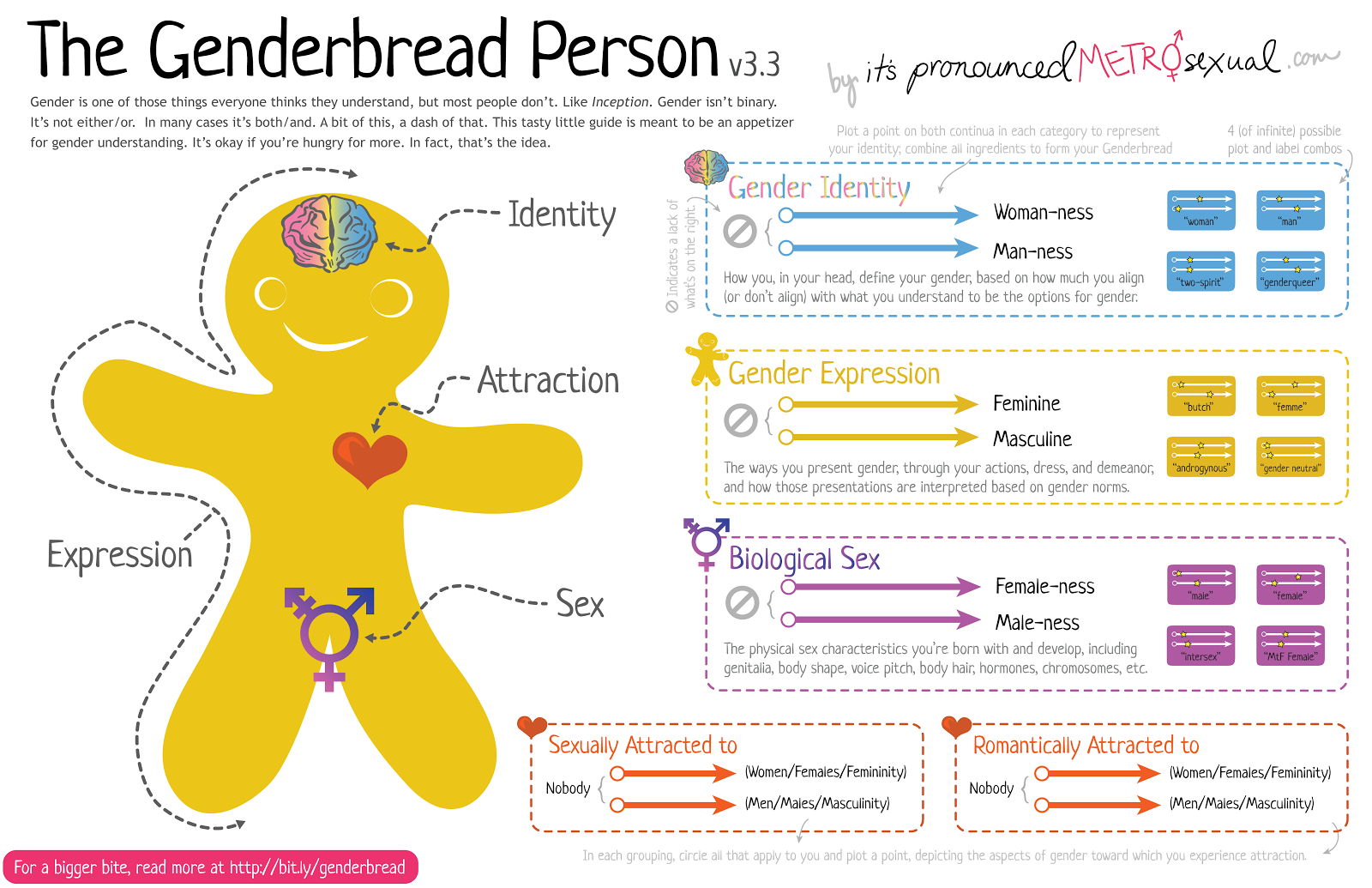
On October 28, 2016, I had the opportunity to attend a conference on Understanding Gender Identity: Working with Transgender/Trans* & Non-Binary Youth. The speaker, Sidney M. Trantham, Ph.D., was excellent. Dr. Thantham maintains a private counseling practice and is an Associate Professor of Counseling and Psychology at Lesley University. He provided an overview of transgender identities including trans*, gender non-conforming, gender queer and gender fluid identities. Trans* is an umbrella term that encompasses a wide range and variation of gender identity, gender expression and those with fluid gender boundaries.

Gender identity is how a person thinks about themselves. It is not binary, but exists along a continuum, much like gender expression, biological sex, and sexual and romantic attraction. One particular graphic that Dr. Thantham shared of the Genderbread Person is helpful in depicting the wide range of ways that a person may self-identify. There is a lot to consider and this graphic provides a good jumping off point for better understanding gender. For even more information, I would recommend exploring www.itspronouncedmetrosexual.com as a good starting point.

Wednesday, November 2, 2016

Mental Health Resources


by Russ Becker

What a week for mental health! Over the past couple of days I found myself scouring various opportunities in search of more information and organizations teamed with improving our students mental health. I was lucky enough to attend two separate conferences this past week both with very different themes, that shared the same goal of improving and providing mental health services. One of these days I spent with the Riverside Trauma Center going through a suicide assessment and intervention training. Riverside has long served our community in regards to mental health and it was a fantastic presentation focused on the awareness and prevention of a problem that unfortunately affects all populations. The second event I had the chance to attend was the MIAA wellness Summit that enables both students and school staff the opportunity to see a series of speakers and connect with Massachusetts based resources that target anything from traumatic brain injury support to addiction training and rehabilitation. While planning out this blog post I had initially intended to go into detail with a number of the important messages I have received over the past week but I felt as if the information is far too vast and all encompassing to be broken down in a single post. Instead, one of the most remarkable pieces that I came away with was the incredible amount of support, interest, and emphasis that has been places on these issues that for far too long have been considered taboo for many communities. As a mental health professional, I have found that one of the biggest barriers to care is the Stigma tied to these struggles and the massive leap of faith affiliated with seeking out help. Events like the two I attended are doing a remarkable job at breaking down that stigma and opening up access to proper care and training for Massachusetts at large. With displays like these, students and staff alike are able to not just witness and experience the struggle that many people endure, but they are provided with proper resources and training to combat these issues. I certainly left these events with a renewed sense of progress and optimism, and it is easy to see how experiences like this can help much more people that maybe we had initially thought possible.

For additional information on mental health resources in our area, please go to our website:
http://medfieldguidance.weebly.com/mental-health-resources.html

Friday, October 28, 2016

Integrating Mindfulness Into the Classroom

by Tracy Allen

Last Friday, I attended a conference on integrating mindfulness into the classroom. I have been following the research on the benefits of mindfulness and even shared my mistaken understanding of it with my 7th graders (who are now sophomores), equating meditation with mindfulness. They are not the same.   The dictionary's definition of mindfulness is "a mental state achieved by focusing one's awareness on the present moment, while calmly acknowledging and accepting one's feelings, thoughts, and bodily sensations, used as a therapeutic technique." Meditation is just one way of getting there. 

We know many of our students are stressed and not with just good stress. When kids are in a heighten state of stress, cortisol is released as part of the fight or flight response. This elevated cortisol level can interfere with learning and memory. One of the many appealing aspects of mindfulness is that it can bring down the cortisol level, thus making students more available for learning. 

At the conference the importance of building one's own practice was as highly emphasized as bringing it to our students. Who could not benefit from lower levels of cortisol?  There were many simple activities that I have started bringing to this year's 7th grade guidance classrooms. As I learn more and work on my own practice, I hope to be able to share more with the students, the staff and the community. It's not very present to say this but more to come.


Monday, September 19, 2016

Conversations About Sexting

by Russ Becker

Sexting, Noun
Definition: The topic that strikes fear into the hearts of parents and school counselors alike.

As I’m sure by now, the term sexting is all too familiar to parents of high school and middle school students. Various news reports, criminal cases and national conversations seem to be popping up daily on a topic that can make even the most unyielding individual uncomfortable. The reality of the situation however, is that while sexting may be a parents worst nightmare it is a reality that our kids have likely become familiar with. The topic itself is often times glossed over, ignored or simply disregarded due to the potential awkwardness and unpleasant nature of the conversation, and who could blame you? How exactly does one talk to their son or daughter about sexting? Entering this dialogue without a proper tool kit can be difficult to say the least making parents consider hurling their child’s phone out of the window to avoid any inherent embarrassment. Due to the importance of the topic the conversation is more imperative than ever and thankfully there are resources to help us navigate these murky waters. Below you will find three links aimed at helping parents facilitate these conversations and giving families relevant information on what sexting means in today’s day and age. While this is a great place to start, any concerns you may have can also be discussed with myself or your child’s guidance counselor. Cybersafety is of utmost importance and we can all work to ensure that right for all of our students.


Displaying

Monday, June 20, 2016

Teen Mental Health Summit

by Anne Lodge

Earlier this spring, Russ Becker and I had the opportunity to attend the 2nd Annual Teen Mental Health Depression & Suicide Conference with four MHS student representatives. Sponsored by the MIAA and the Massachusetts Secondary School Administrators’ Association (MSSAA), the conference aimed to increase awareness and recognition of the importance of supporting our students and staff in the area of social-emotional wellness and learning. The conference’s keynote speaker, Jeffrey Benson, focuses his work on assisting administrators and teachers in developing school culture, structure, curriculum, and instruction that supports all learners. He addressed many of his remarks directly to the student representatives at the conference, urging them to make change in their school communities by asking questions, having conversations with teachers or administrators, and speaking up for themselves and their needs.

Following the keynote address mini workshops were held focused on model programs and curriculums, resources for schools, and informational sessions on mental health topics. We each took the opportunity to attend different sessions so that we could get the most out of the conference. Workshops included information on successful school transition programs, empowering and leading student leaders in promoting wellness, strategies for relieving stress, recognizing and intervening in youth depression, fostering resilience through everyday classroom practices, and initiating difficult conversations, among others. They offered up good suggestions and practices, but most importantly, the conference highlighted the critical role social-emotional wellness plays in schools and communities and how essential it is for all educators to focus on building supportive environments. The quotation on our program agenda by Leo Buscaglia, an American author and motivational speaker, sums it up well:

“Too often we underestimate the power of a touch, a smile, a kind word, a listening ear, an honest compliment, or the smallest act of caring, all of which have the potential to turn a life around.”

Tuesday, June 14, 2016

Stress Free Zone


by Russ Becker


Headaches, inability to focus, increased irritability, lowered self esteem. These are just some of the many symptoms of stress that I’m sure are all too familiar for those reading this. While some stress can certainly be a good thing, too much can be all consuming and an awfully difficult hurdle to overcome, and striking that balance is often much easier said than done.

Beginning this Friday, our students will undergo the final stretch of their academic year culminating in finals week. While this can be a great way to finish the year on a high note, many students experience an increased level of stress at this time. So much so that a recent study conducted by the UK’s ChildLine National Exam Stress Survey revealed that 96% of the 1,300 students polled were experiencing more anxiety and stress in their daily lives due to their upcoming exams. Acknowledging that this is a difficult time for many, we are excited to announce that we are implementing a new program aimed at lessening that stress and teaching our students more effective ways of managing that pressure. Following the completion of the first exam period this Friday, the High School’s “Stress Free Zone” will be open to all students. The safe haven will take place in room 125 and there students can have snacks, partake in various stress free activities, and will be given a packet of strategies that can help mitigate their stress. While finals are certainly the most prevalent thing on most student’s mind it’s equally as important to take a breath and find strategies for relaxation in order to effectively move through our final stretch. Please feel free to contact me if you would like more information on any of the activities being run or how you can use some of these strategies in your own home.


Friday, April 1, 2016

Where does technology come in from a social/emotional learning perspective?

by Tracy Allen

Technology has brought wonderful and exciting new things to learning in our district. Last week's DLD day was an opportunity for teachers to share what they're doing with each other. It truly is amazing to see technology's impact from a student perspective. 

Where does technology come in from a social/emotional learning perspective? This question was addressed as part of a larger discussion about technology and schools with a panel moderated by Blake principal Nat Vaughn and made up of  IT Directors from other school districts as well as our own Superintendent Jeff Marsden. The S/E component can not be separated from the educational component, according to one of the panelists. Digital Citizenship and ethics around device use are part of that conversation. One place that we, as a department, will start exploring more are the programs, apps, and digital resources that guidance counselors, particularly at the middle school level, can be used in the guidance classes. 

One great presentation on DLD day was about an app called Social Stories. Students for whom previewing social situations helps could read and reread a story created by a teacher or counselor before actually encountering potentially scary events like the first day of school or when a teacher takes a maternity leave. This app was originally developed to help people with autism preview new situations. However, I think the app could appropriately used for a number of our students.

In my 6th grade guidance classes, I am asking kids to think back to things that made them nervous about entering Blake. They are using the app to create stories, all in the first person so the reader can imagine himself/herself in that situation, that would help answer questions and preview experiences that might be "scary" when entering the middle school. I hope to have a variety of scenarios available on the guidance website this summer to help quell pre-Blake jitters.

As the direction of technology in the classroom has been so exciting to watch, I think the journey of technology in S/E learning will be equally exciting.

Thursday, March 31, 2016

Helping Students Achieve Through Intrinsic Motivation


by Kathy Mahoney

motivation-by-michael-jordan-quote.jpg

I recently finished a graduate course in student motivation, and one of the biggest take-aways that I gained is the importance of building intrinsic motivation in young people. Many times as parents and teachers, we provide incentives in order to motivate our kids to learn. In the short term this may produce the desired goal, but in the long run, it builds extrinsic motivation, or motivation that stems from some type of tangible reward. The problem is that when students are solely motivated by extrinsic means, they can become less driven when the promise of a reward is gone.

Intrinsic motivation, on the other hand, comes from within; it is a desire to work hard for personal satisfaction and growth. This is a much more powerful way to drive achievement and learning. Teachers can help to build intrinsic motivation by celebrating learning, rather than offering a reward. Another way to engage students is to make the lesson meaningful to the child. Both teachers and parents can build intrinsic motivation in kids by welcoming their questions, encouraging exploration, and providing a supportive environment that promotes independence and self-worth.

As humans, we have a natural desire to learn about the world around us. If we can foster that desire, we can help students reach higher and achieve more.

Tuesday, March 29, 2016

“I don’t want to go to school today”


Inline image 1

by Russ Becker

“I don’t want to go to school today”. I’m sure that statement rings true with just about everyone. Whether your child has had an “off day” or if you remember a specific instance that you simply did not want to spend your day in a classroom, the sentiment is shared by most. Many individuals are able to get past that feeling and spend their day furthering their education, but what happens to those who can’t? Discourse such as “Can’t these students see the importance of going to school?” Or “If they say they want to get to school then why are they sitting in bed all day?” are all too common when discussing the topic of school avoidance which often negates the fact that this is a legitimate problem facing a number of students.

This past Thursday I was able to go to a conference lead by Dr. George Haarman with the aim of uncovering more information about the topic of school refusal. Dr. Haarman is one of the foremost leaders in not only studying school refusal, but actively combating many of the factors that keep our students from accessing their education. The information was vast, and highlighted the mountain of factors that could contribute to why a child cannot or will not come to school. Hardly ever does a student simply make up his or her mind that they never want to come to school again. Instead there is usually an underlying factor or factors that act as barriers towards the student’s education. Whether that barrier is mental illness, instability in some facet of the student’s life, or another mitigating issue often times these problems become too much for a student to overcome in order to properly access a curriculum. Dr. Haarman not only outlined the many causes for this issue, but properly demonstrated techniques on how to treat these difficult cases. Going forward I certainly aim to employ many of these techniques while being cognizant of some warning signs in order to help these students before symptoms of school refusal even manifest. Please contact me if you’re searching for more information on the topic or about the conference in general.

Monday, March 28, 2016

7th Grade SOS

by Jen Dondero

On March 7th, the 7th grade students participated in the Signs of Suicide Prevention Program (SOS). We believe it is important to focus on the whole child and assess any social-emotional needs he/she may have and address them. The teen years can be tumultuous emotionally and we believe it is important to be proactive in supporting students. SOS is the only school-based suicide prevention program selected by The Substance Abuse and Mental Health Services Administration for its National Registry of Evidence­Based Programs and Practices. This is the only school­based suicide prevention program that addresses suicide risk and depression, while reducing suicide attempts. It was a joint effort by the Medfield High School and the Blake Middle School guidance department. Students were exposed to the ACT acronym, which stands for Acknowledge the problem Care for yourself/friend Tell a trusted adult.In groups, of approximately 20-25 students, students viewed a video regarding suicide and depression; they were shown a powerpoint of describing signs of depression and suicidality. They were then asked to fill out a survey to assess whether or not they were at risk for depression or suicide. They were also asked if they needed to speak to a guidance counselor about their needs or the needs of a friend. Students were provided with guidelines for getting further support if needed. After going through the questionnaires, we determined which students needed to be seen by the guidance counselor and also did outreach to parents to ensure the student was safe and going to be supported at home.

The following data breaks down the information for our SOS program at Blake

Participated - 180
Opted Out - 20
Absent – 5

Brief Screen for Adolescent Depression

Score
Meaning
# of Students
0-2
Unlikely you have depression
169
3
Possible you have depression
7
4-7
Likely you have depression
4

Question 4 and 5 are about suicidal thoughts and behaviors
Yes
No
No Response
Do you think seriously about killing yourself?
2
178
Have you tried to kill yourself in the past year?
0
180

5 - Students indicated that they wanted to talk


Monday, February 1, 2016

Break Free From Depression


By Russ Becker

Inline image 1
Did you know that approximately 1 in 5 American adolescents experience depression before the age of 19? Or that of those experiencing depression only 40% will undergo some sort of treatment? The reality of the situation is that depression is a very real concern regarding the lives of our teens, and one that is not being addressed effectively. As a district, Medfield has worked vigilantly to inform students and help those in need through a variety of new curriculum and programs, and this past Thursday, Matt Merenghi and were trained on increasing our ability to do so. We both attended a training for a program is entitled “Break Free From Depression” with the aim of comparing it to our already existing curriculum. The program’s focus lies in increasing knowledge of depression for students while providing resources for those who need more immediate attention. The program provided a consistent message with much of the material that we had already been teaching, but going forward we will reassess our curriculum to examine if there is a better way to disseminate the information. The statistics prove that this is at the forefront of what our students are struggling with, and by attending this training we hope to continue meeting our students needs. Please contact me if you would like to know more about either this program or the existing curriculum surrounding the subject.